September 12, 2025


By Brennan LaBrie
The key to driving success for all students is creating a belonging-rich environment. Our research proves it, and the lived experience of many students and teachers backs it up.
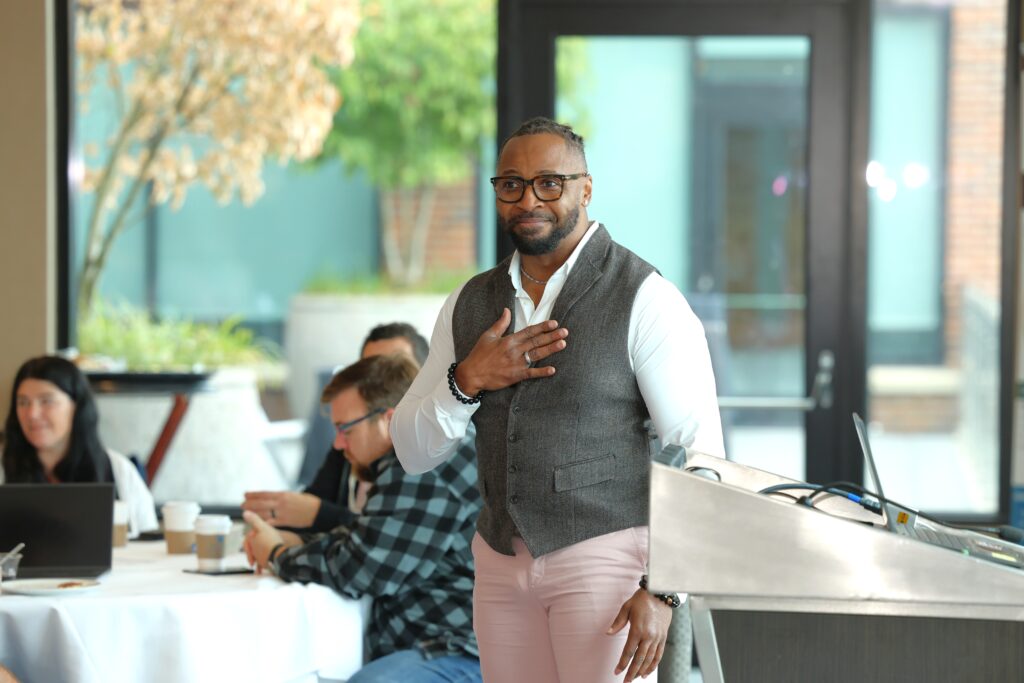
Just ask Kim Douglas, partnership director at EOS, who saw the power of belonging first-hand over 15 years as an educator, counselor and equity team leader.
During this time, he developed seven strategies to foster belonging from day one through the final bell. With the school year getting underway, Kim is sharing them to help educators build environments where all students can thrive.
Strategy 1: Start with student voice, not rules
“In order for students to really feel a sense of belonging, you have to give them a voice,” he says. This starts with classroom rules, which teachers usually create themselves.
Instead, these rules – or agreements, as he prefers to frame them – should be developed in collaboration with students. This gives students agency in this important process, helps them understand expectations, and builds shared responsibility.
“Instead of beginning with ‘here’s what I expect,’ we can ask them ‘what makes you feel safe and respected in this particular environment,’” Kim says. “Now, we’re building the culture and the environment together.”
When agreements are broken, the teacher can remind students what they agreed on, together – and not to punish them, but to “redirect” them, he adds.
Strategy 2: Set the tone with your language
“Sometimes teachers have a tendency to be very intimidating to a lot of students, based on how we carry ourselves,” Kim says.
Intimidation closes students off, while supportive language opens them up. Choosing warm, encouraging and respectful language – even while pushing students as learners – signals that the class is a safe space to be themselves.
“You can violate an agreement and I can bring it to your attention, but the tone I use will determine whether or not you see it as me penalizing you or trying to redirect you,” he says.

Strategy 3: Learn not only names, but stories too
“Teachers feel like they got to start teaching on day one,” Kim says – something he attributes to expectations set by school and district leadership. “And that really defeats the purpose of building community, and an environment that is going to be productive for not only teachers but students too.”
Learning each student’s name is the priority on day one, but teachers should go further by committing to learn as much as they can about each student – and providing space for them to learn about each other.
Strategy 4: Foster a culture of inclusion early
“A lot of times teachers see the classroom as their domain, and that’s the wrong perspective to have, because the classroom belongs to every individual – this is our community.” Kim says.
Opening up dialogue with students and promoting communal storytelling helps build that community. Another tactic Kim and his fellow teachers employed was greeting each student at the door of the classroom, to connect individually and spot signs of distress before class started. This tactic, mandated in the first week of school, became a habit many teachers continued all year.
Strategy 5: Build a belonging map
An effective way to get students to tell their stories is through activities that highlight their hobbies and interests. In Kim’s class, students placed pins on posters denoting things they enjoyed, which revealed unique aspects of each student as well as common ground. Meanwhile, Kim took notes in preparation for strategy six.
Strategy 6: Shape Content Using Student Interest
After gathering insights on your students’ interests, from sports and movies to their favorite influencers, find ways to work them into your lesson plans. You have the full year to learn new fun facts, and the more you learn about your students, the more ways you can bring their world into the classroom.
This strategy is a simple way to promote culturally-relevant teaching and representation into your classroom while boosting engagement, he says.
Strategy 7: Normalize asking for help
In order to feel safe and welcome in the classroom – and to thrive academically – students must feel empowered to ask for help.
“It’s a necessity for the growth of that student as well as for the success of the class,” he says.
Start by making it clear that “there are no dumb questions” and “asking for help is smart.” Then, show that you mean it by sincerely engaging with their questions – and asking them questions back.
“When I’m asking them questions, I’m showing them that they are a needed participant in everything that’s going on, because we’re building classroom culture and community,” he says.
Takeaway:
These seven strategies can be implemented from day one of class, but they should inform your teaching all year long, Kim says. After all, there are always new things to learn about your students and new ways to engage and empower them as learners.
“Everything we do should lead back to giving students agency, and showing them their importance in the class,” he says.
Brennan LaBrie helps amplify the work, mission, and impact of the EOS team and our partners across the education landscape. With a background in local journalism, he seeks to share the stories of individuals and organizations driving impact in their community and beyond.
Other blogs you might be interested in
Going Beyond Numbers: How to Build College-Going Cultures in Michigan Schools
By Paul DeAngelis, Senior Director of Partnership Development Too often, the push for higher college enrollment gets framed as a numbers game based on how many students fill out applications, sit for entrance exams, or declare a campus their next
Learn More
Making Student Surveys More Accessible: EOS + Understood.org
This article is adapted from a recent blog post by our partners at Understood.org. Read their full post here. At EOS, were student survey to reach – and understand – every student in our partner schools. But we identified a
Learn More
Meet EOS’ 2025-26 Opportunity Champions
Last year, EOS launched the Opportunity Champions program to recognize school and district leaders in our network driving transformational change in their advanced academic pathways. Throughout the school year, these leaders drive EOS’ work by breaking down barriers to advanced
Learn More